
 EN
EN



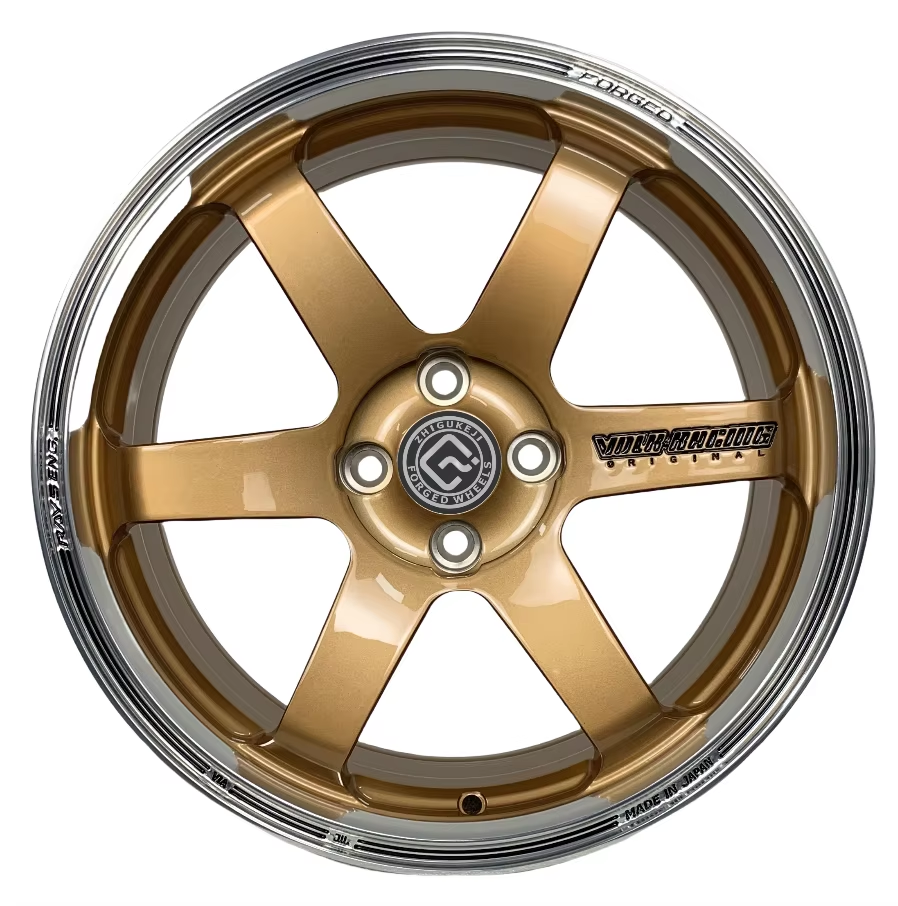
Structural Design and Manufacturing Philosophy
Monoblock (2-Piece) Construction: Flow-Formed Integrity vs Welded/Bolted Interfaces
Monoblock wheels start as solid blocks of aluminum and get shaped through this process called flow forming. When they spin the wheel while applying pressure, it actually makes the metal molecules pack tighter together, which gives them better strength against impacts compared to regular cast wheels. After shaping, manufacturers attach the central part of the wheel to the outer rim in two main ways. Some use welding because it keeps costs down, while others go for precise bolts when performance matters most. Welded joints can develop tiny cracks from all the heat generated during long races, but bolted ones let mechanics take things apart and fix problems on site. What both methods share though is this weak spot at where the center meets the rim. During those sharp turns when cars hit over 1.5 G forces sideways, this joint takes a beating. Race teams need to pay special attention to how these connections hold up under such extreme conditions before heading out onto the track.
Modular Architecture of 3 Piece Wheels: Bolted Rim Shell, Center, and Outer Ring
Three piece wheels break down into three different parts basically: there's the forged center disc, plus inner and outer rim shells made from materials like aluminum or titanium, all held together using those special aerospace quality fasteners. The way these wheels are built in three sections means no welding at all happens during manufacturing. Plus, how they handle stress is pretty smart too. When something hits the wheel from the side, the outer shells take most of the impact. Meanwhile, when torque is applied through turning motions, the central part deals with that force instead. What makes this design really valuable for mechanics? If just one part gets damaged, the whole wheel doesn't need replacing. According to some industry studies looking at product lifecycles, this modular approach cuts down on replacement costs over time by around 40 percent. Mechanics can swap out individual components rather than dealing with entire wheel assemblies, which saves both money and workshop space in the long run.
Racing Performance: Weight Distribution, Stiffness, and Handling Response
Rotational Mass Advantage: How 3 Piece Wheels Reduce Unsprung Weight at the Rim Edge
Three piece wheels are better for placing weight where it matters most. The heavy stuff goes near the center around the hub area, while lighter alloy makes up the outside part of the wheel. This setup actually reduces rotational inertia by something like 18% when compared to those solid one piece wheels that many racers still use today. And this isn't just some random idea either it follows what engineers have known for years in racing circles. When there's less weight hanging out at the edge of the wheel, the suspension reacts faster which means better grip coming out of corners and more stable handling during hard stops. Drivers notice this difference right away with smoother power delivery and real improvements in lap times, particularly in sections where quick acceleration is everything.
Torsional Rigidity and Turn-In Precision: Why Stiffness Matters on High-Speed Circuits
How stiff a wheel is when twisted determines how accurate steering feels during hard cornering. Three piece wheels offer better structural strength because they have forged centers and stronger bolts connecting the parts together. This setup reduces unwanted flex that can make steering responses slower or mess up tire contact points. When drivers hit tricky tracks such as Spa-Francorchamps or Suzuka, these wheels give them sharper entry into corners, keep tires planted properly throughout those tight sequences of turns, and ultimately shave seconds off lap times when pushing through sustained cornering forces.
Track Durability and Thermal Resilience
Heat Cycling Endurance: Crack Resistance in 3 Piece Wheels Under Repeated Brake Fade Conditions
When wheels hit the track regularly, they face brutal temperature swings. Brake fade incidents often send spot temps soaring past 500 degrees Fahrenheit. Monoblock designs tend to expand evenly throughout their structure, which actually speeds up the development of tiny cracks right where stress builds up most. Three piece wheels handle thermal stress differently though. The aluminum rim barrel expands separately from the forged center section, with a stainless steel outer ring serving as kind of a heat shield. This design breaks up stress points pretty effectively, cutting localized stress by around 40 percent according to lab tests, and giving these wheels about 30% longer lifespan when put through endurance simulations. The gaps between parts help release heat faster too, so warping doesn't happen as much after quick cool downs. That means better consistency for drivers going through multiple sessions on track days or competing in long endurance events where wheel integrity matters most.
Fitment Customization and Race-Specific Tuning with 3 Piece Wheels
Independent Adjustment of Width, Offset, and Backspace–Without Compromising Caliper Clearance or Suspension Geometry
Three piece wheels let racers fine tune width, offset, and backspace separately just by swapping parts like the center section, inner barrel, or outer lip. No need for those spacers that cause problems down the road by putting stress on wheel bearings and messing with how the suspension works. Mechanics can get everything adjusted between practice sessions about 73 percent quicker compared to replacing whole monoblock wheels. Want more grip? Just widen that outer lip without moving the hub around. Need negative offset? Set it up properly so scrub radius stays intact and control arms work right. Adjust backspace to make sure nothing gets in the way of calipers or suspension components either. All these changes happen independently without creating other issues elsewhere on the car. The whole system works together but each adjustment stays contained and maintains structural integrity throughout.
FAQ
What are the main differences between monoblock and 3 piece wheels?
Monoblock wheels are made from a solid piece of material, usually aluminum, offering superior strength due to flow forming technology. In contrast, 3 piece wheels consist of three separate parts—center disc, inner, and outer rim shells, which can be independently replaced and adjusted, offering customization benefits and better handling of thermal stress.
Why are 3 piece wheels preferred in racing?
3 piece wheels are preferred because they reduce unsprung weight at the rim edge, improve rotational mass, and offer better rigidity and handling on high-speed circuits. They also allow fitment customization without compromising suspension geometry.
What are the benefits of 3 piece wheels regarding maintenance and costs?
The modular design of 3 piece wheels allows for individual component replacements, reducing the costs associated with full-wheel replacements by approximately 40%. This design also results in longer wheel lifecycles, particularly in harsh racing environments.