
 EN
EN



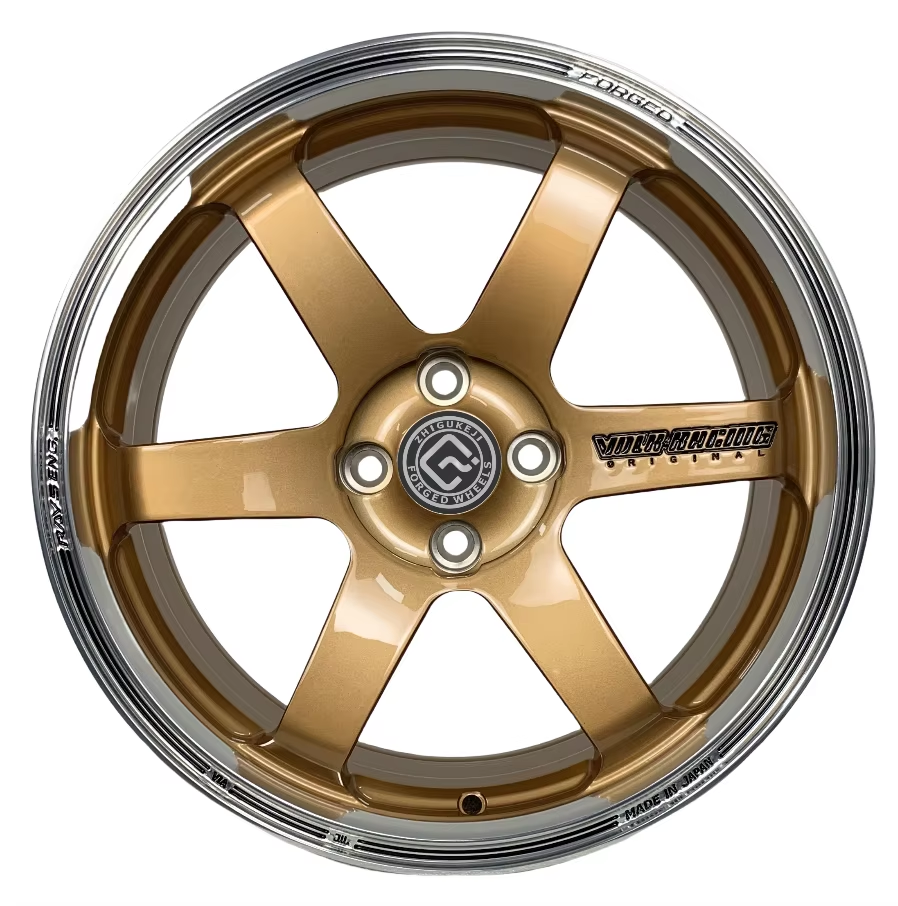
How Forged Rims Are Made: From Billet Aluminum to Precision-Machined Wheel
Hot Forging Under Extreme Pressure: Forging Grain Flow for Superior Structural Integrity
Starting off, we work with aerospace quality 6061-T6 aluminum billets. These solid blocks get picked specifically because they offer great strength while being light weight, plus they have consistent metal properties throughout. When heated past 400 degrees Celsius, these blocks go through something really intense. They face hydraulic pressure that goes beyond 10,000 tons all at once during one controlled forging movement. What happens next? Well, this massive force actually changes how the aluminum molecules line up inside. Instead of staying randomly arranged, they form long flowing patterns that follow the shape contours. This process gets rid of those pesky air holes inside the metal and makes the material denser by around 15%. Casting metals leaves behind trapped air pockets and creates uneven grain structures, but forging gives us a completely solid piece where strength spreads evenly across the whole thing. For wheels made this way, tests show they can handle about 30% more force before yielding compared to cast versions. And since there are no tiny cracks forming under stress, these forged wheels stand up much better against road hazards like potholes, curb damage, and all sorts of repeated impacts over time.
CNC Machining, Heat Treatment, and Surface Finishing for Exact Tolerances and Premium Aesthetics
Once the forging process is done, wheel blanks get worked over with precision CNC machining on those multi-axis mills we all know about. The machine carves out spokes, makes space for valve stems, drills those lug holes just right, and shapes the hub-centric areas too. All these parts need to be super accurate, within about 0.01mm either way. Why? Because when everything fits perfectly together, the wheels spin smoothly without wobbling or causing vibrations even at high speeds. What happens next? The wheels go through what's called T6 heat treatment. First they're heated up to around 530 degrees Celsius, then quickly dunked in water to cool them down fast. After that comes artificial aging where they sit at 175°C for eight long hours. This whole process locks in the metal's structure so it can handle more stress. Tests show this actually makes the material about 25% stronger while still keeping enough flexibility to absorb impacts without cracking. And finally, there's something else added to the surface...
- Polishing: An 8-stage abrasive sequence delivering mirror-finish reflectivity
- Coating: Electrostatic powder coating or Physical Vapor Deposition (PVD) for UV stability, chip resistance, and corrosion protection
- Quality Control: X-ray scanning and ultrasonic testing to verify structural integrity before shipment
This integrated workflow ensures every forged rim meets OEM-level standards for dimensional accuracy, mechanical performance, and aesthetic refinement.
Why Forged Rims Deliver Unmatched Performance: Strength, Weight, and Durability
30% Lighter Than Cast Wheels with Higher Yield Strength: The Science Behind the Strength-to-Weight Ratio
What makes forged rims so special isn't just what they're made from, but how they're made at the molecular level. When manufacturers hot forge these wheels, they actually reshape the aluminum's internal structure. The heat and pressure force those tiny metal grains to line up along the wheel's shape instead of being randomly scattered. This process gets rid of air pockets inside the metal, packs it tighter (about 15% denser), and makes it significantly stronger than regular cast wheels. Plus, the whole thing ends up weighing around 25 to 30% less. Why does this matter? Because when we talk about unsprung mass—the stuff hanging off the suspension—saving even 1kg here feels like saving 10kg somewhere else on the car. Real world tests back this up too. Cars with lighter forged wheels tend to accelerate about 8% faster off the line, and drivers notice much better response when they hit the gas pedal hard. This difference becomes really apparent in electric vehicles and those sporty cars with big turbochargers that need all the responsiveness they can get.
Superior Fatigue Life and Impact Resistance—Validated in Track, Street, and OEM Testing
The absence of porosity and presence of directional grain flow give forged rims exceptional fatigue resistance across real-world conditions. Motorsport validation shows they withstand 2.5× more repeated high-curb impacts than cast wheels without measurable deformation. Controlled laboratory testing further demonstrates their structural superiority:
| Test Type | Cast Wheel Failure Rate | Forged Wheel Performance |
|---|---|---|
| Pothole Impact (60km/h) | 42% deformation rate | 0% deformation |
| Cornering Fatigue | Cracks at 80k cycles | No failure at 250k cycles |
| Extreme Heat Cycling | 15% strength reduction | <3% strength reduction |
These results underpin why Porsche, Lamborghini, and Rimac specify forged construction for flagship models—validated through 200+ lap endurance trials showing 80% fewer wheel-related failures versus flow-formed alternatives. Critically, when overloaded, forged rims deform elastically rather than fracturing catastrophically—maintaining bead seal integrity and tire pressure during severe impacts.
Real-World Driving Benefits of Forged Rims: Braking, Handling, and Ride Quality
When it comes to driving performance, forged rims offer real benefits beyond just track days. These wheels typically weigh 20 to 30 percent less than standard cast ones, which means cars handle corners better and respond quicker when making sudden direction changes. Drivers who've tested them report noticeable improvements in how fast they can turn into bends without feeling sluggish. Lighter wheels also work wonders for braking systems since they spin up and slow down much easier. This helps brakes work more effectively and stay cooler during those times when someone needs to stop suddenly multiple times in a row. Everyday drivers will appreciate how these wheels soak up road bumps better too. The solid construction dampens vibrations so less roughness gets passed through to the steering wheel and seats. Road tests show they hold up surprisingly well against common hazards like potholes, loose gravel, and uneven pavement. The metal simply doesn't bend out of shape like cheaper alternatives might, keeping everything aligned properly and tires wearing evenly over time. From buzzing through busy intersections to tackling twisty backroads, vehicles equipped with forged rims just feel more connected to the road surface, giving drivers greater control and peace of mind mile after mile.
Forged Rims in Luxury and High-Performance Applications: OEMs, Supercars, and Motorsport
Porsche, Rimac, Lamborghini, and BMW M: How Leading Brands Specify Forged Rims for Critical Models
Leading car manufacturers don't just throw forged rims on their high-end or track-oriented models as some fancy extra - they're actually essential from an engineering standpoint. These forged wheels typically weigh around 34% less than regular cast ones, which makes a huge difference in how fast cars can accelerate, stop, and recover energy, especially in top electric vehicles such as the Porsche Taycan or the Rimac Nevera. When we look at supercars specifically, cutting down on rotational mass means better control over torque distribution and much sharper handling when entering corners. This becomes really important when dealing with engines producing over 700 horsepower that need to respond almost instantly. Racing teams know this well because their forged wheels can withstand the punishment of long endurance races where constant side loads and curb hits would destroy cheaper alternatives. Luxury automakers also care about these forged wheels for reasons beyond just performance. They offer beautiful CNC machining details, special coatings that fight rust, and parts that can be swapped out after accidents (like replacing damaged sections). All these factors help maintain the brand's reputation while keeping vehicles valuable for years. At the end of the day, forged rims combine advanced metal science, exact manufacturing techniques, and proven results on actual roads and tracks, making them the go-to option whenever performance, safety, and lasting durability matter most.
FAQ
What are forged rims made from?
Forged rims are made from aerospace quality 6061-T6 aluminum billets selected for their superior strength and lightweight properties.
How do forged rims improve performance compared to cast wheels?
Forged rims are about 30% lighter and 15% denser than cast wheels, offering enhanced performance like faster acceleration, better handling, and improved braking performance.
Why do luxury and high-performance cars use forged rims?
Luxury and high-performance cars use forged rims for their reduced weight, superior strength, precision machining, and resistance to harsh driving conditions, all of which contribute to enhanced vehicle dynamics.
Table of Contents
- How Forged Rims Are Made: From Billet Aluminum to Precision-Machined Wheel
- Why Forged Rims Deliver Unmatched Performance: Strength, Weight, and Durability
- Real-World Driving Benefits of Forged Rims: Braking, Handling, and Ride Quality
- Forged Rims in Luxury and High-Performance Applications: OEMs, Supercars, and Motorsport
- FAQ