
 EN
EN



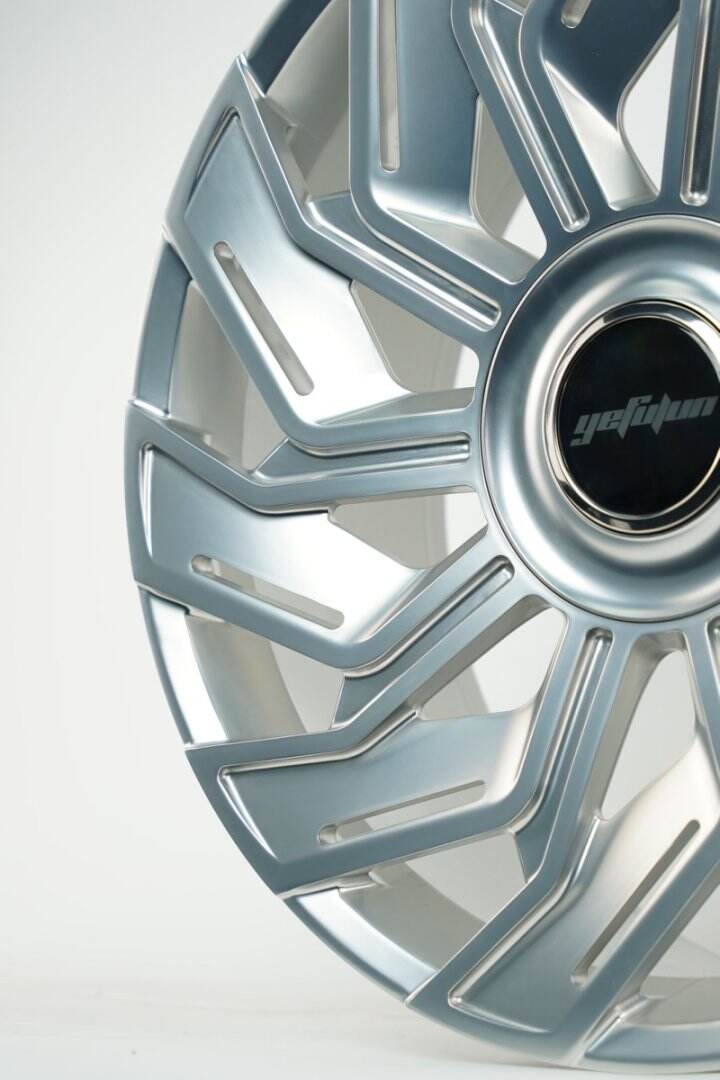
How Deep Concave Wheels Create Stereo Depth and 3D Visual Impact
The Geometry of Concavity: Rim Curvature, Spoke Contour, and Perceived Volume
Concave wheels with their inward sloping spokes and curved rims create a stronger sense of depth when viewed from certain angles. Flat faced wheels just don't have the same effect because the concave shape actually makes different parts of the wheel stand out in layers. The hub appears to go back while the outer edge sticks out more forward. What happens here is pretty interesting geometrically speaking. The whole thing goes from looking flat on paper to something that feels three dimensional when seen in real life. When those spokes angle towards the middle part of the wheel, they give off an illusion similar to what our eyes expect when looking at objects in space. Studies show these curved designs can make wheels look about 40% heavier than they really are according to Automotive Aesthetics Journal last year. That kind of visual weight plays tricks on our brain making us associate them with strength and better performance capabilities.
Light Dynamics: Shadow Gradients, Highlight Concentration, and Depth Cues on Deep Concave Wheels
The way light interacts with surfaces actually makes things look bigger or deeper than they are. When sunlight hits something or when we turn on lights indoors, shadows form in the indented parts. These shadows tend to get darker closer to where everything comes together, while brighter spots show up around the edges and spokes that stick out. Our brains automatically interpret these dark and light contrasts as depth cues. What's interesting is that movement really brings this effect to life. As wheels spin around, the changing patterns of light create what looks like motion through space, which tricks us into seeing those dents as much deeper than they really are. According to a study from last year, most people (about 78%) connect these kinds of recessed designs with high-end sports cars. Makes sense though, doesn't it?
Deep Concave Wheels as a Signature Sporty Statement
Psychological Association Between Visual Depth and Performance Credibility
Deep concave wheels have that unmistakable look that just screams performance, even if we don't realize why at first glance. The way they curve inward reminds people of those high-end race car parts, making them think about strength and exacting engineering standards. According to some research published last year in Vehicle Styling Journal, around 7 out of 10 car buyers seem to connect wheels with deeper concavity to better performance overall. There's actually science behind why this happens, though most folks probably wouldn't put it into words when talking about their next set of rims.
- Shadow gradients suggesting sophisticated structural engineering
- Recessed spoke architecture implying weight optimization
- Aggressive curvature visually signaling torsional rigiditySuch design language transforms wheels into credibility markers—where increased concavity directly correlates with perceived mechanical advantage.
Real-World Validation: Deep Concave Wheels on OEM Performance Models (e.g., BMW M3 G80, Porsche 992 Turbo S)
Car makers back up the link between design and performance when they spec out those deep concave wheels for their top-tier sport models. Take the new BMW M3 G80 for example it comes with 20 inch concave rims right from the factory, perfectly matched to its track ready suspension setup. Porsche does something similar with the 992 Turbo S model, offering those distinctive staggered concave alloy wheels as part of the package. When car companies choose these designs, it's not just about looks they've put them through all sorts of tests in real world conditions. According to recent studies (Automotive Aesthetics Report 2024), cars with concave wheel designs score around 15 to 18 percent better in how people perceive their athletic capabilities compared to models with flat faced wheels. These wheels actually do two things at once improve airflow around the brakes for better cooling, and create that unmistakable aggressive look that screams speed even when parked.
Deep Concave vs. Deep Dish Wheels: Clarifying Intent, Structure, and Aesthetic Outcome
Both wheel styles create dramatic visual effects with depth, but they approach engineering from completely different angles. Concave wheels curve inward from rim to center, forming those cool recessed spokes that play tricks with light and shadow to look bigger than they are. These wheels focus on cutting down weight which helps cars accelerate faster and handle better, plus they meet today's brake clearance requirements without issue. Deep dish wheels take another route entirely. They push the mounting area back, giving them that thick outer lip everyone loves. Sure, this design isn't great for aerodynamics, but it looks super retro and aggressive. When it comes to how they hold up structurally, concaves spread stress across those curved spokes attached at the edges. Deep dishes instead depend on those heavy outer lips, which actually makes them heavier to spin around. Looking at what each offers, concave wheels scream future tech and work well on performance machines. Deep dishes? They just shout muscle car vibes and fit right into custom builds where style matters most.
| Aspect | Deep Concave Wheels | Deep Dish Wheels |
|---|---|---|
| Design Goal | Weight-optimized performance | Aggressive visual presence |
| Structure | Inward-sloping spokes | Rear-mounted hub + large lip |
| Performance | Better acceleration/handling | Increased rotational mass |
| Aesthetics | Modern, technical sophistication | Retro, muscular statement |
Material choice further differentiates them—deep concave designs increasingly use forged aluminum to maintain strength despite complex curves, while deep dish wheels often employ heavier cast constructions to support wide lips. These divergences make deep concave wheels the pragmatic choice for drivers balancing aesthetics with contemporary performance demands.
Optimizing Deep Concave Wheel Fitment: Size, Offset, and Brake Clearance Considerations
Why 19–22 Inch Applications Maximize Visual Concavity Without Compromising Functionality
When it comes to deep concave wheels, most engineers agree that sizes between 19 and 22 inches hit just the right balance between looking cool and actually working well on a car. These dimensions give enough room around the spokes for those dramatic curves without making the whole wheel unstable. Wheels smaller than 19 inches simply don't have enough surface area to create any real concave effect, whereas anything bigger than 22 inches tends to need extra reinforcement which adds unwanted weight. For folks wanting that extreme concave look, going with lower offsets usually means better results since it pushes the spokes inward toward the center of the wheel. But there's a catch too - getting these measurements right is super important otherwise the spokes might rub against the fenders when turning. Brake clearance is another big deal here because many high performance cars come equipped with massive calipers that sit on rotors measuring over 380mm across. Fortunately, the 19-22 inch size range typically leaves enough space between the spokes and these large brakes so manufacturers don't have to resort to boring flat face designs.
- Front/rear stagger strategies where deeper concavity suits rear wheels with smaller brakes
- Forged construction advantages for maintaining strength at aggressive offsets
- Tire profile compatibility ensuring proper load ratings (critical for +22" applications)
This diameter bracket delivers visual drama through engineered depth while preserving daily drivability—a convergence of form and function distinguishing premium fitments.
FAQ
What is the primary advantage of deep concave wheels?
The main advantage of deep concave wheels is their ability to create a 3D visual effect and stereo depth, enhancing the perceived strength and performance capabilities of a vehicle.
Do deep concave wheels affect car performance?
Yes, deep concave wheels are designed for weight optimization, which can improve acceleration and handling while also accommodating brake clearance requirements.
How do deep concave wheels compare to deep dish wheels?
While both styles enhance visual appeal, deep concave wheels focus on performance through inward-sloping spokes, while deep dish wheels emphasize an aggressive visual presence with a larger lip.