
 EN
EN



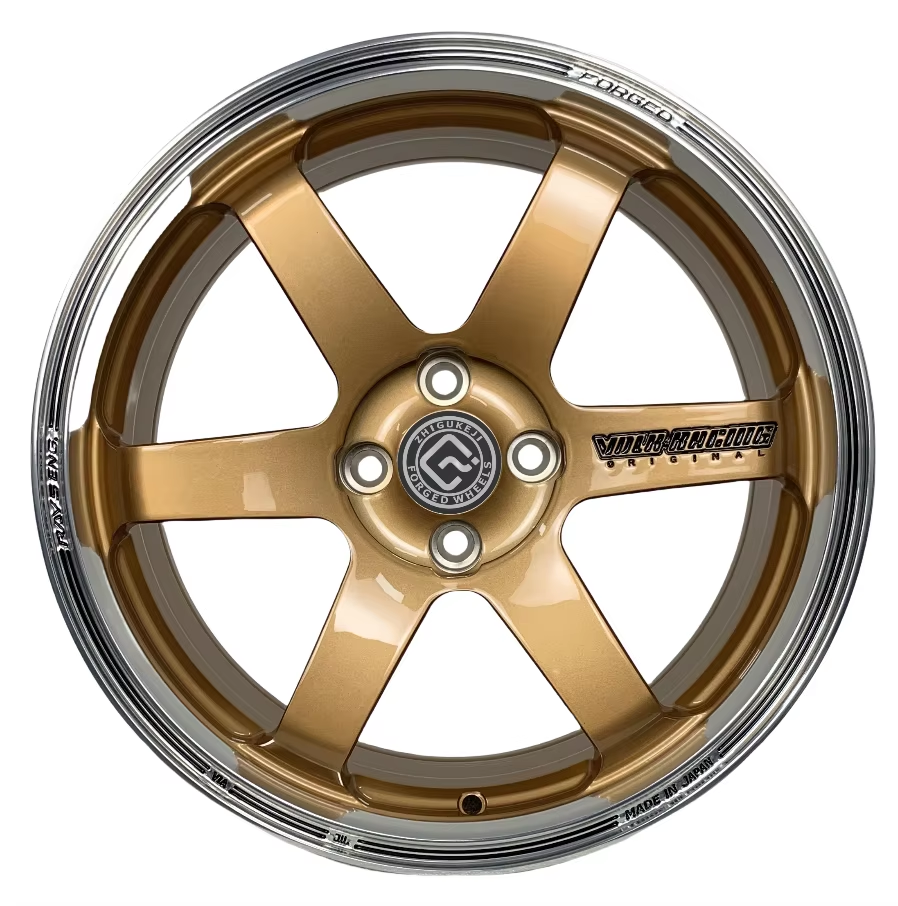
Polishing Forged Rims for Precision and Shine
Polishing transforms forged rims by eliminating micro-scratches and surface imperfections, enhancing both aesthetics and structural integrity. This critical process elevates surface quality while preserving the forged aluminum’s inherent fatigue resistance—essential for high-stress automotive applications.
Mechanical Polishing: Tumbling, Brushing, and Wheel Techniques for Aluminum Forged Rims
The mechanical polishing process relies on abrasive materials to gradually smooth out those rough spots on forged rims. Different methods work best for different situations. Tumbling works well for processing multiple pieces at once inside those vibrating containers. Rotary brushing creates those nice straight grain patterns that look so professional. Wheel polishing takes things even further with layers of progressively finer compounds until we hit those super smooth finishes around Ra 0.2 to 0.1 microns. Smart manufacturers spend plenty of time adjusting all sorts of factors like how dense the media is, how fast everything spins, and how long each part stays in the machine. This careful balancing act prevents too much material from getting stripped away while keeping those tight dimensional specs intact, especially important when dealing with complicated shapes and angles.
Electrolytic and Chemical Polishing: Achieving Mirror Finish and Micro-Smoothness on Forged Rims
The process of electrolytic polishing involves submerging forged rims into special electrolyte solutions while applying controlled electrical currents that target and remove tiny surface irregularities. Chemical polishing works similarly to achieve those ultra smooth surfaces (around 0.1 microns roughness) but relies on acid instead of electricity. Both techniques produce mirror-like finishes that regular grinding just cant match. What makes these approaches particularly valuable is their contact-free operation, which matters a lot when dealing with complex wheel designs where traditional tools might cause warping or uneven results. According to findings published last year in an industry report on automotive surfaces, wheels treated this way show about half as many spots where rust starts forming compared to standard untreated surfaces.
Plating Forged Rims for Corrosion Resistance and Visual Impact
Plating adds protective metallic layers that significantly extend service life while amplifying visual impact—critical for forged rims exposed to road salts, moisture, UV radiation, and thermal cycling.
Electroplating vs. Electroless Plating: Uniform Coverage on Complex Forged Rim Geometries
The electroplating process works by running an electric current through metal solutions to coat surfaces with materials such as nickel or chromium on things that conduct electricity. The good news is this method can finish jobs pretty quickly within just a few minutes and gives really accurate control over how thick the layer ends up being around 0.5 to 5 micrometers thick. However there's a catch when dealing with deeper areas because the electricity doesn't spread evenly throughout those spots which causes problems especially noticeable on curved surfaces or complex wheel designs with multiple spokes. On the flip side electroless plating takes a different approach using chemicals that react automatically without needing electricity to create very consistent coatings with tolerances under plus or minus 0.1 micrometer no matter what shape the object happens to be. This technique even works on materials that don't conduct electricity although it does take longer several hours to complete and requires much stricter control over the chemical baths used during processing.
| Attribute | Electroplating | Electroless Plating |
|---|---|---|
| Coverage Uniformity | Moderate (geometry-dependent) | High (conformal) |
| Process Speed | Fast (minutes) | Slow (hours) |
| Substrate Needs | Conductive only | Any material |
| Tolerance Control | ±2µm | ±0.1µm |
Chrome and Color Plating: Functional Trade-offs in High-Performance Forged Rims
Decorative chrome plating creates those shiny mirror finishes we all recognize, using thin layers of nickel and chromium around 0.3 to 1 micrometer thick. People love how it looks, but let's face it, it doesn't hold up well against corrosion when winter hits hard. Hard chrome plating goes much thicker, sometimes up to 250 micrometers, which makes surfaces more resistant to wear and tear. However, this added thickness comes at a cost since it increases rotational mass, potentially messing with vehicle handling and even cutting into fuel economy. Then there's PVD or Physical Vapor Deposition coatings that give off colorful options like matte black or brushed gold without any actual metal content. These add almost nothing to weight, but they chip easily when stones hit them because of their ceramic-like composition. For wheels that need real performance, zinc-nickel alloy plating offers a good middle ground. It stands up to salt spray testing for over 500 hours according to ASTM standards, all while barely adding any extra weight. That makes it a smart choice for forged rims where strength matters just as much as appearance does.
Anodizing Forged Rims for Enhanced Durability and Design Flexibility
Hard Anodizing vs. Decorative Anodizing: Matching Surface Requirements to Forged Rim Applications
Anodizing grows a controlled, integral aluminum oxide layer directly from the substrate—enhancing corrosion resistance while enabling broad aesthetic expression. The choice hinges on application priorities:
- Hard anodizing produces a dense, microcrystalline oxide layer up to four times thicker than decorative variants—delivering superior wear, impact, and chemical resistance. It excels in off-road, track, or severe-duty environments but limits color options to subdued tones (charcoal, bronze, clear).
- Decorative anodizing emphasizes visual versatility through electrolytic coloring, supporting custom hues from matte black to iridescent gold. Though thinner and less abrasion-resistant, it retains robust corrosion protection suitable for street-driven vehicles where appearance and daily durability coexist.
For track-focused forged rims, hard anodizing’s structural resilience outweighs cosmetic constraints. Show or luxury applications benefit from decorative finishes that harmonize with vehicle styling without compromising baseline protection—provided they’re not deployed in high-impact or chemically aggressive conditions.
Strategic Integration of Surface Treatments for Optimal Forged Rim Performance
When we put together polishing, plating, and anodizing processes, the results often surpass what each treatment could achieve alone. Most shops start with mechanical polishing first because it gets rid of those tiny flaws left from forging operations. This creates a smoother base surface with lower Ra values that makes everything else work better. After that comes electrolytic polishing which takes care of even smaller surface irregularities. Studies show this step cuts down on coating porosity by about 25-30% before hard anodizing is added, something really important for parts that need to withstand repeated stress cycles. For extra protection against wear and tear, many manufacturers apply chrome or zinc-nickel plating on top of already anodized surfaces. But getting good results requires careful attention to how these layers interact and maintaining proper thickness throughout the stackup.
This layered strategy balances aesthetics with endurance: decorative topcoats resist UV fading and environmental etching, while engineered subsurface layers sustain structural integrity under impact and thermal stress. Data from the Materials Performance Journal (2023) shows integrated treatments extend service life by 40% versus single-process approaches. High-performance manufacturers ensure reliability through:
- Cross-process validation, including digital twin simulations to predict thermal expansion mismatches between layers
- Micro-thickness control, limiting total coating buildup to €15 µm at high-stress zones (e.g., spoke roots, barrel edges)
- Accelerated corrosion testing, verifying salt-spray resistance beyond 1,000 hours
The outcome? Forged rims that simultaneously meet SAE J2530 impact standards and retain mirror-grade finishes after 100,000+ miles—demonstrating how precision-integrated surface engineering unlocks next-generation wheel performance.
FAQ Section
What is the purpose of polishing forged rims?
Polishing forged rims eliminate micro-scratches and surface imperfections, enhancing their aesthetics and structural integrity while preserving fatigue resistance.
How does mechanical polishing benefit forged rims?
Mechanical polishing smooths rough spots on forged rims through abrasive methods, improving the surface finish and maintaining dimensional specs critical for complex shapes.
What are the advantages of electrolytic and chemical polishing?
Electrolytic and chemical polishing achieve ultra smooth mirror-like finishes and help prevent rust formation, especially in complex wheel designs.
How does plating protect forged rims?
Plating adds protective metallic layers to forged rims, extending their service life, and enhancing visual appeal while providing resistance against environmental stressors.
What are the benefits of anodizing forged rims?
Anodizing enhances corrosion resistance and allows aesthetic customization, with hard anodizing providing superior protection and decorative anodizing offering visual versatility.