
 EN
EN



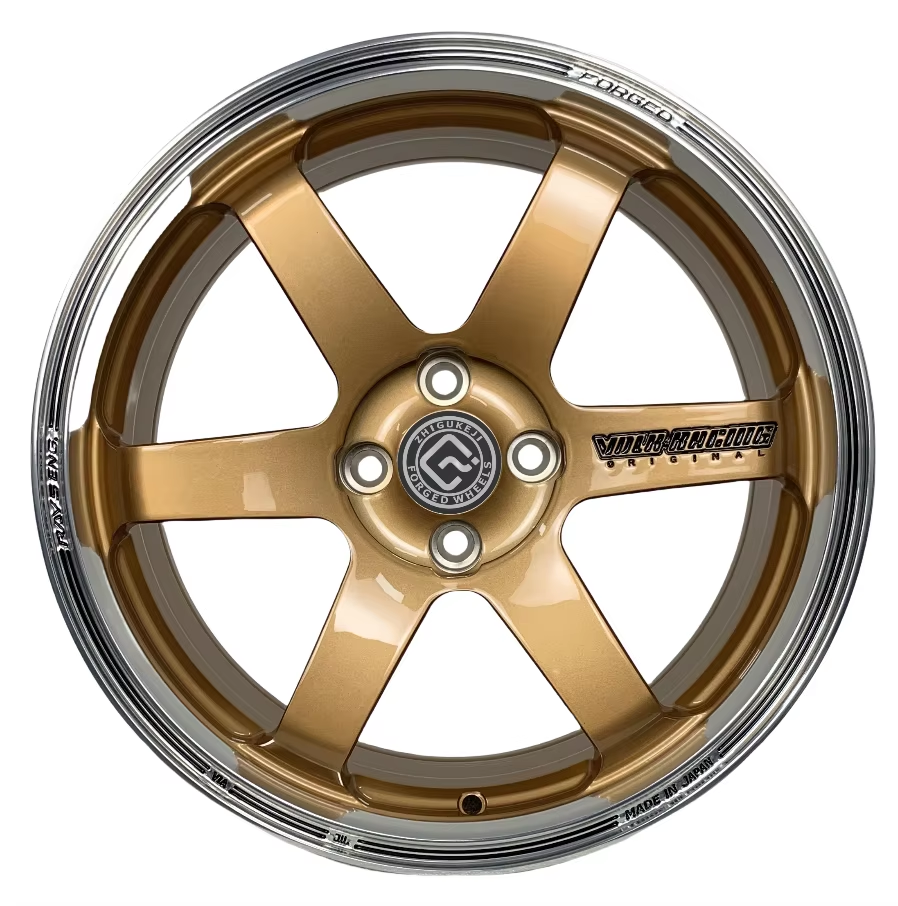
Precision Handling and High-Speed Steering Response
Direct steering feedback is paramount when navigating high-speed curves, where milliseconds determine control precision. Performance wheels enhance this responsiveness through two critical engineering parameters: structural rigidity and optimized diameter.
How Wheel Rigidity and Diameter Optimize Real-Time Steering Feedback
When wheels are built stiff, they don't bend much when pushed sideways, so what the driver does gets transmitted right to the tires almost immediately. Wheels that have over 800 Nm per degree of rigidity actually show around 30 percent better steering response, which means those tiny adjustments made while going past 100 miles per hour still work as intended instead of getting lost somewhere along the way. Bigger wheel sizes also help because they create a larger area where the tire touches the road surface, giving roughly 19% more grip when changing direction suddenly. This combination matters a lot on racetracks, especially when exiting corners where drivers need to apply power with pinpoint precision. The special alloys used in these wheels stay strong and consistent even after lots of aggressive turns, so there's no gradual loss of responsiveness that would mess up how the car handles through multiple laps.
Track-Validated Rigidity Thresholds for Performance Wheels (900+ Nm/deg)
Rigidity beyond 900 Nm/deg represents a proven performance benchmark, reducing spoke deflection below 0.3 mm during 2G cornering loads. Laboratory and track testing reveal measurable outcomes:
| Rigidity Level | Steering Lag Reduction | Lap Time Improvement |
|---|---|---|
| <700 Nm/deg | Baseline | 0% |
| 900+ Nm/deg | 41% | 2.8 seconds* |
| *Per 5 km circuit (SAE J2570-2023) |
Forged alloys are the main players here because their grain structure lines up in a way that makes them really good at fighting off stress fractures and cutting down on unsprung weight too. When paired with damping systems that work against vibrations around 80 to 110 cycles per second, these forged wheels get rid of that annoying numb feeling people often experience with cast wheels. The engineers back this up through testing with yaw rate measurements. Wheels below 900 Newton meters tend to vary about 15 percent more when going through tight turns, which definitely affects how stable they feel coming out of corners.
Enhanced Traction and Braking Performance with Performance Wheels
Thermal Management at the Tire-Wheel Interface During Repeated Hard Braking
High performance wheels handle heat much better when someone slams on the brakes hard thanks to their special alloy material. Tests from last year show these wheels get rid of heat about 28% faster than regular steel ones. What does this mean? The brakes stay cooler so the fluid doesn't turn into vapor and the pads don't get glazed over. Drivers can stop from 100 to 0 km/h multiple times in a row without losing stopping power, which cuts down on brake fade by around 40%. How do they do it? The design directs heat away from the rotor through the spokes properly. This helps prevent cracks from forming where the metal gets really hot after repeated use, keeping everything intact even when pushed hard for long periods.
Unsprung Mass Reduction: Measured Braking Distance Gains per Kilogram
Reducing rotational mass directly enhances braking responsiveness through three key mechanisms:
- Inertial advantage: Each 1 kg removed from wheel assemblies decreases stopping distance by 2.1 meters at 100 km/h (SAE J2570-2023)
- Suspension reactivity: Lighter wheels improve tire contact patch stability during weight transfer
- Energy requirement: Lower mass reduces kinetic energy needing dissipation
The greatest gains occur below 9 kg per wheel—where diminishing returns set in above that threshold. Track testing confirms 18" forged wheels deliver the optimal balance of mass reduction and structural rigidity for performance applications, supporting both braking precision and high-G cornering integrity.
Aerodynamic Efficiency and Thermal Dissipation in Performance Wheels
Brake Cooling Channels and Vortex Control in Forged Alloy Designs
On race tracks, brake temps often hit over 500 degrees Celsius which puts serious strain on components and causes fading issues. Performance wheels made from forged alloys fight back against this problem through clever cooling channel designs. These channels funnel fast moving air right onto the calipers and rotors, cutting down peak temps somewhere between 15 to 20 percent when compared to regular solid wheels (thermal imaging studies show this in 2024). Engineers also tweak spoke shapes using computational fluid dynamics to create those swirling vortices that pull heat away without adding extra drag. And here's where forged alloys really shine they conduct heat away at roughly three times the speed of cast options. All these innovations work together to keep brakes performing consistently even after multiple heavy stops, while maintaining stability at high speeds. This just goes to show how smart engineering combines aerodynamics with thermal management in today's advanced wheel technology.
Structural Integrity: Strength-to-Weight Ratio Under Extreme Loads
When performance wheels are subjected to intense dynamic loads, especially those situations where side forces go beyond about 1.5G during sharp turns, they need to hold together without failing. What really matters in these conditions is something called the strength to weight ratio. Basically, this measures how much weight something can carry compared to its own mass. Forged alloys that have been advanced through modern techniques create better ratios because they cut down on weight but still keep the wheel stiff enough, around 900 newton meters per degree or so, which stops them from bending or wearing out when stressed. Getting this right gives us several benefits worth mentioning:
- Reduced unsprung mass improves suspension responsiveness and tire contact maintenance
- Higher inherent damping absorbs road-induced vibrations more effectively
- Uniform load distribution across spokes and rim flanges prevents localized stress fractures
Improving the strength to weight ratio by around 15% actually cuts emergency braking distance by roughly 3 meters when going at 100 km/h speeds. When manufacturers focus on this balance instead of simply making parts stiffer or lighter, they create wheels that can handle curb hits and road bumps without getting too heavy. Heavy wheels slow things down during acceleration, make stops less effective, and dull the feel through corners. Finding that sweet spot between strength and weight is what makes these wheels work so well on race tracks where every fraction of a second counts.
FAQ Section
Why is wheel rigidity important for performance?
Wheel rigidity ensures that steering adjustments are transmitted precisely to the tires, improving handling and control at high speeds.
How do performance wheels enhance braking?
Performance wheels manage heat better and reduce unsprung mass, enhancing braking responsiveness and reducing brake fade.
What is the benefit of unsprung mass reduction?
Reducing unsprung mass improves braking distance, suspension reactivity, and overall vehicle handling by reducing kinetic energy dissipation.
Why are forged alloys preferred in performance wheels?
Forged alloys provide better strength-to-weight ratios, resistance to stress fractures, and enhanced heat dissipation compared to cast options.
How do aerodynamic features contribute to wheel performance?
Aerodynamic features like brake cooling channels reduce component temperatures and improve thermal dissipation, ensuring consistent performance.